
Hacking Bigfoot Glossary
This Bigfoot glossary provides additional context for some terminology used in Hacking Bigfoot. The descriptions are not intended as an exhaustive treatment.
Admixture
The resulting offspring of species that previously had no contact with each other.
Australasia
A geographic region that includes the lands of modern-day Australia, New Guinea, and New Zealand.
Australopithecines
A class of small, bipedal beings resembling chimpanzees that lived a few million years ago. The paleosciences no longer consider this species to be a lineage of Homo sapiens.
Beringia
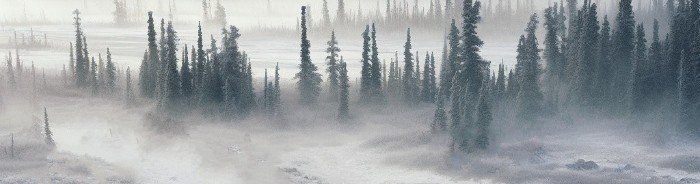
The Arctic region between Asia and North America. At low sea levels during the Pleistocene, it was a land bridge connecting continents.
Bioanthropology
The study of biological impacts on human evolution and history. Comparatively, physical anthropology is the study of human and non-human primate evolution from a non-genetics perspective.
Biodiversity
The depth and variety of living organisms in a specific area. Biodiverse regions are evolutionary origin points of numerous species.
Biogeography
The study of how and why species distribute across geographical ecosystems through periods of earth history.
Bioinformatics

Bioinformatic software compares unknown genetic sequences to known sequences according to programmed inputs. The outputs can be used to infer evolutionary relationships between sequences as well as help identify members of gene families.
Biome
A geographical area with a specific climate and forms of life, such as fauna and vegetation.
Denisovan
An extinct species of archaic human. Fossils of the species have been discovered in Asia. Ancient DNA testing determined Denisovans were most closely related to Neanderthals.
Derivative
Something that derives from something else.
DNA (Deoxyribonucleic Acid)
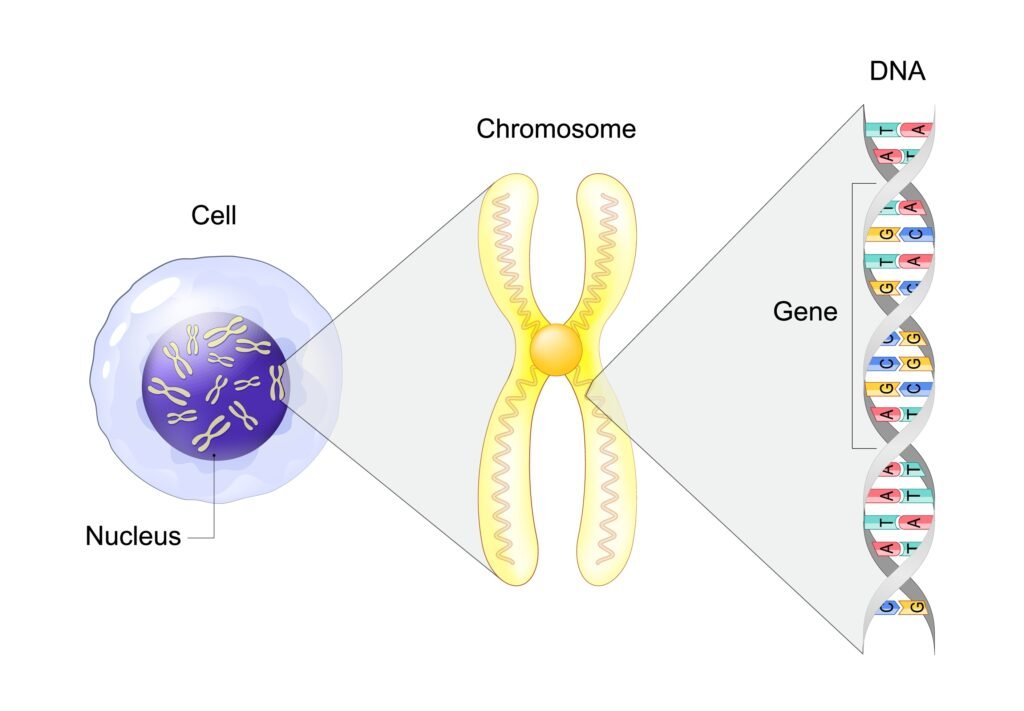
A molecule that contains a genetic blueprint of an organism.
A genome is a complete set of genetic information about an organism.
Ancient DNA (aDNA) is ancient genetic material. Because of the age and fragility of fossils, only incomplete parts of a genome can usually be extracted.
Mitochondrial DNA (mtDNA) is DNA inherited maternally.
Nuclear DNA (nuDNA) is paternal DNA.
A reference genome is a baseline set of sequences that genetically define an organism.
A primer is a chemical solution used in DNA testing as a template to match with other samples.
Epigenetics are the effects of environment on DNA over evolutionary history. For example, archaic populations acquired functional genes that impacted immunity, metabolism, high-altitude survivability, and other climate conditions which demanded physiological changes over evolutionary time.
Genetic expression is a result of random mutations that occur for unknown reasons, slowly over evolutionary time.
A haplotype is a variation of genetic markers belonging to a common inherited ancestor.
A polymorphism is a genetic variation resulting in different forms of individuals among members of a single species. An example is the separation of higher organisms into male and female sexes or the different blood types in humans.
Environmental DNA (eDNA) consists of organic substances sampled in nature instead of directly from an organism.
Ecosystem
A physical environment where multiple varieties of organisms coexist and share resources within a geographic area.
Eurasia
The combined continental landmass of Europe and Asia.
Extinct/Extant
An extinct species has died out. An extant species has survived to the present day.
Flores
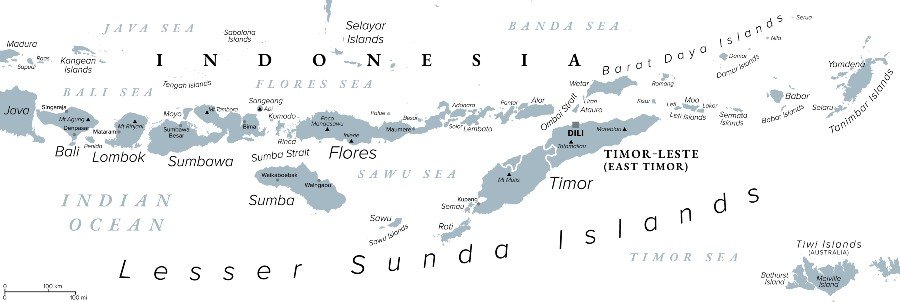
An island that is part of Indonesia in the Malay Archipelago. In previous time periods, the islands were once part of greater Sundaland. Flores is most well-known for its fossil finds of very small bipedal species and contrasting animal dwarfism and gigantism, such as extinct mini-elephants and extant giant Komodo dragons.
Great Apes
Chimps, bonobos, orangutans, gorillas, humans, and gibbons. Each is considered to be a distinct species, not correlated together in evolutionary terms.
Habitat
The ecosystem where a species dwells.
Holocene
A geologic period from the previous 11,700 years since the last ice age.
Hominid
All modern and extinct great apes and their ancestors.
Hominin
All modern humans and extinct Homo species, including their presumed ancestors.
Homo sapiens
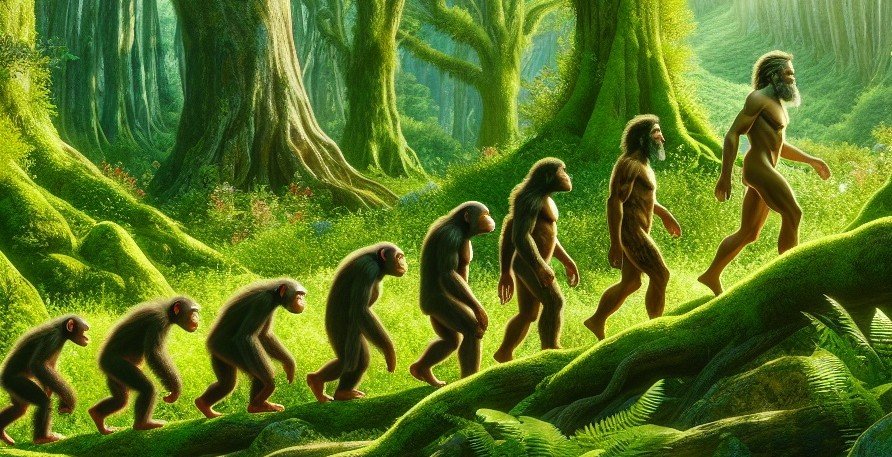
Modern humans.
Introgression
Genetic transfer between species as a result of cross-breeding, including hybridization.
Island gigantism and dwarfism
Terms to describe unique forms of genetic expression. Depending on environmental conditions and available resources, dwarfism or gigantism can occur in species that live undisturbed in isolation. Some early forms of early humans experienced dwarfism and gigantism in their evolution while coexisting with animals in situations where they did not compete for resources. So far, those conditions are discovered on islands.
Land Bridge

The Isthmus of Kra is a remnant of a Pleistocene land bridge. Today, it separates mainland Asia and the Malay Peninsula.
At low sea levels during the Pleistocene, land bridges connected microcontinents, islands, and archipelagos, allowing human migration without watercraft.
Last Glacial Maximum
A time period approximately 20,000 years before present. There have been other glacial maximums as ice ages covered parts of the earth in different time periods.
Megafauna
Large forms of animal, reptile, and bird life, ranging in biological complexity.
Neanderthal
An extinct archaic species with fossils mostly found in today’s Europe. Ancient DNA has determined that Neanderthals had genetic exchanges with both Homo sapiens and Denisovans.
Oceania
The islands of the Pacific Ocean.
Paleoanthropology
The study of human evolution and prehistory through the analysis of fossils and archaeological artifacts.
Paleogenomics
The study and analysis of ancient DNA from extinct species.
Phylogenetics
A representation of the evolution of a species and its relationships to other species.
Pleistocene
A geological period in earth history characterized by alternating extreme drought and glaciation. The Early Pleistocene is after 2.5 million years ago. The Late Pleistocene is approximately from 125,000 to 12,000 years ago.
Pongine
Asian hominids.
Prehistory
Events or conditions preceding documented human history.
Primate
A mammal family with shared characteristics, including humans, apes, monkeys, lemurs, lorises, and tarsiers.
Rainforest
Tall, dense, humid jungles that receive a high amount of rainfall. A rainforest ecosystem during an ice age is able to sustain habitats for people and many species of animals and plants adapted to the conditions.
Sahul Land
A vast geographical region occupying the Australian microcontinent, including outlying islands and now submerged shelves. The region has been separated by water since at least 60 million years ago. As a result, many mammals of this region are distinct from other mammals of North and South America, Africa, Asia, and Europe.
Sundaland
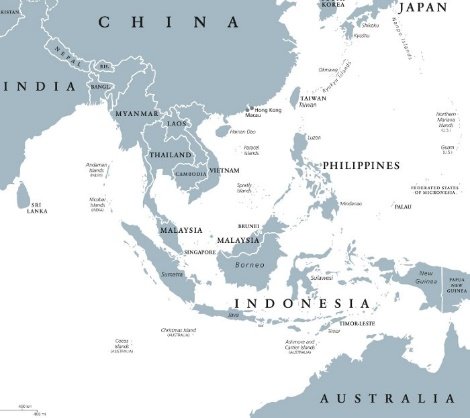
A geographical region of Southeast Asia with a central landmass on the Malay Archipelago that was exposed for 2.6 million years during low sea levels. Evidence of submerged land shelves indicates it is likely the landmass extended into the Pacific as far as today’s Japan and the Philippines.
Wallacea
At low sea levels during the Pleistocene, the island region between Asia and Australia was a land bridge that enabled early human migrations from Sundaland into Sahul Land, which is today’s Australia, New Guinea, Tasmania, and outlying islands.
Wallace Line
An imaginary line created by 19th-century naturalist Alfred Russel Wallace, which geographically divides the distribution of mammals, birds, and flora between the ecosystems of Sundaland and Sahul Land.
See also endnotes.
See the placement.pub Linktr.ee.